
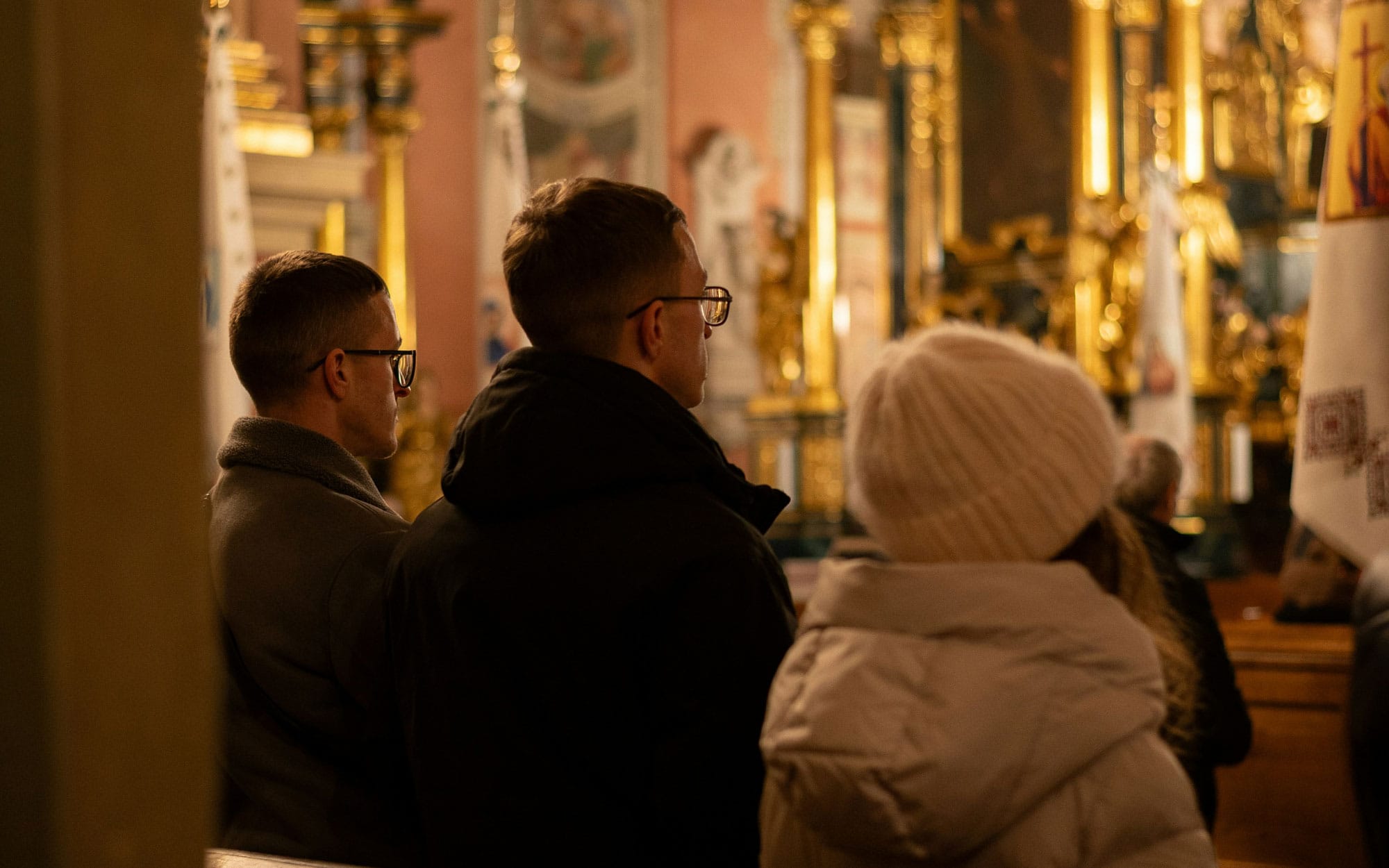
A wake-up call for church leaders about why young people are leaving for Orthodox, Catholic, and even Islamic communities
The Uncomfortable Truth We Need to Face
While many of us have been wringing our hands about declining youth attendance, something remarkable and challenging has been happening right under our noses. Young people in Britain are not simply drifting into secularism, they are actively seeking out the most traditional and demanding forms of faith available. Orthodox Christianity, Roman Catholicism, and Islam are experiencing unexpected growth among 18–35 year-olds.
This phenomenon challenges our fundamental assumptions about what the rising generation wants from religion. We have spent decades assuming that younger people desire increasingly casual, flexible, and culturally accommodating forms of faith. The data suggests precisely the opposite: they are fleeing toward the ancient, the demanding, and the countercultural.
The numbers should sober us. The British Social Attitudes Survey (2023) found that 41% of young churchgoers in England and Wales now identify as Catholic, compared to just 20% Anglican. A 2018 study by the Faith Matters think tank reported that around 5,000 people convert to Islam annually in the UK, a significant proportion in their twenties. Orthodox parishes in London and Birmingham speak of a “tsunami” of young male converts seeking depth and seriousness.
But here is the hopeful twist: young people are not disinterested in God. Far from it. They are spiritually hungry, and they are telling us something vital about what they long for. Their exodus from evangelical churches is not a rejection of the sacred but a search for the sacred in its fullest expression.
The “Quiet Revival” That’s Passing Us By
Some commentators have spoken of a “quiet revival”, noting that church attendance among young people has increased significantly since 2018. The Talking Jesus Report (2022) and data from Tearfund confirm that religious affiliation among 18–24 year-olds has grown. Yet when we examine this renaissance more closely, we discover a striking reality: most of this resurgence is happening in Catholic and Pentecostal churches.
Anglican attendance among young people has continued to drop, falling from 41% of all churchgoers in 2018 to just 34% in 2024 (BSA Survey). Meanwhile, Catholic numbers rose from 23% to 31%, and Pentecostals doubled from 4% to 10%. This divergence reveals something profound about the spiritual marketplace: young people are not allergic to church, but they are unconvinced by shallow and diluted Christianity.
The revival is not happening to us. It is happening around us. And it tells us something crucial about the kind of faith that captures the imagination of a generation raised on Instagram but longing for eternity.
What specifically attracts them to these traditions? Catholic Churches draw young adults through Latin Mass communities, Eucharistic adoration, intellectual rigour, and uncompromising moral teaching. Pentecostal Churches offer supernatural encounters, prophetic ministry, and tangible experiences of divine power. Orthodox Churches provide liturgical beauty, mystical theology, and what converts describe as “unchanged Christianity.” Islamic Communities appeal through the rhythm of five daily prayers, Ramadan’s transformative fasting, and a comprehensive worldview that creates clear distinction from secular culture.
The common thread is unmistakable: these traditions demand significant commitment while offering transformative spiritual experiences and countercultural community identity.
The Global Pattern: A Generation’s Spiritual Revolution
This phenomenon extends far beyond Britain’s shores, suggesting we are witnessing not isolated church dynamics but a generational spiritual revolution across the Western world. In the United States, Pew Research (2021) documents rising interest among 18–29 year-olds in “high church” traditions and sacramental practices. Australian young adults are converting to Orthodoxy at rates unseen since post-war immigration, while Catholic theology programmes are oversubscribed and progressive religious studies programmes struggle with enrollment. In Germany, despite widespread secularisation, the Jugend 2000 movement has drawn thousands of young Catholics into traditional worship. Canadian researchers speak of a “post-secular turn” among young adults, characterised by a search for costly and countercultural religion.
This international pattern reveals something profound about the spiritual hunger of a generation: they are rejecting accommodation for authenticity, convenience for cost, and relevance for reverence.
Why They Are Leaving Us for Others: The Five Sacred Longings
The international data and cultural analysis point to five consistent longings that traditional communities are meeting more clearly than many evangelical churches. These are not superficial preferences but deep spiritual hungers that emerge from the particular cultural moment in which this generation has been formed.
1. Transcendence, Not Entertainment
The most striking pattern in conversion testimonies is young people’s rejection of churches that felt too much like entertainment venues. One former Protestant, now Orthodox, told a researcher: “It was not too different from my Saturday night in a bar, the same kind of lighting, the same kind of music, the same kind of feeling.”
This critique cuts to the heart of contemporary evangelical worship culture. In our desire to be accessible, have we made the sacred indistinguishable from the secular? In our pursuit of relevance, have we lost reverence?
They are not looking for coffee shops, laser lights, or TED Talk sermons. They are seeking the sacred, the mysterious, encounters with the living God that feel genuinely holy. They want to enter a space that immediately signals: “You are in the presence of the Almighty.”
Scripture reminds us that worship is meant to be an encounter with divine majesty: “Let us offer to God acceptable worship, with reverence and awe, for our God is a consuming fire” (Hebrews 12:28–29). When Isaiah encountered God in the temple, he did not think about accessibility or cultural relevance, he fell on his face crying, “Woe is me!” (Isaiah 6:5). Young people are seeking that kind of transformative encounter with the divine.
2. Challenge, Not Comfort
Perhaps nothing exposes the gulf between evangelical assumptions and young people’s actual desires more than their embrace of difficulty. Young Orthodox believers willingly adopt 40-day fasts, endure two-hour liturgies in ancient languages, and submit to regular confession. Young Catholics are drawn to the Latin Mass and rigorous moral teaching that demands lifestyle changes. Converts to Islam submit to five daily prayer cycles, pre-dawn worship, and month-long Ramadan fasting.
This presents a profound challenge to the prosperity gospel mentality that has infected much of evangelical culture, the assumption that God wants to make life easier, more comfortable, and more successful. Young people are explicitly rejecting this narrative in favour of traditions that promise suffering, sacrifice, and spiritual struggle.
They are not looking for easy Christianity that asks little of them. They are looking for disciplines that cost something and fundamentally change them. They understand intuitively what Dietrich Bonhoeffer meant when he wrote: “Cheap grace is the deadly enemy of our church. We are fighting today for costly grace.”
Jesus Himself warned: “If anyone would come after me, let him deny himself and take up his cross daily and follow me” (Luke 9:23). The generation that grew up with participation trophies is now deliberately choosing spiritual traditions that demand everything. This should humble us and make us question whether we have been offering them what they actually need or merely what we assumed they wanted.
3. Rootedness, Not Relevance
In an age of constant technological disruption, cultural upheaval, and institutional collapse, young people are gravitating toward churches with unbroken historical continuity. They want to practice faith the way Christians did 2,000 years ago, not a version constantly re-adapted to contemporary cultural preferences.
One Orthodox convert explained: “When everything else in culture shifts constantly – gender definitions, family structures, moral frameworks – I need something that has remained the same for two millennia.”
This represents a fundamental rejection of the evangelical obsession with relevance and innovation. Where we see stale tradition, they see stabilising truth. Where we see necessary adaptation, they see faithless accommodation. They are not looking for churches that change with every cultural wind but for ancient practices and unchanging truth.
The irony is profound: evangelical churches, which pride themselves on biblical authority, can point not only to the Reformation’s recovery of scriptural truth but deeper still to the apostolic witness itself. We proclaim “the faith that was once for all delivered to the saints” (Jude 3). Yet somehow, in our eagerness to contextualise, we have given the impression that our faith is as changeable as contemporary culture.
Young people are seeking what T.S. Eliot called “the intersection of the timeless with time”, spiritual practices that connect them across centuries to the communion of saints. They want to pray with Augustine, fast with the desert fathers, and worship in ways that would be recognisable to Christians across the ages.
4. Depth, Not Shallowness
Young converts frequently describe feeling spiritually starved by abbreviated services, simplistic preaching, and theological lightweight programming. They are drawn to traditions that offer rich theology, rigorous catechesis, intellectual challenge, and theological mystery that cannot be exhausted.
This hunger for depth manifests in surprising ways. Catholic universities report that young people are flocking to courses on medieval philosophy, patristics, and systematic theology, subjects that academic wisdom assumed would appeal only to specialists. Orthodox parishes find young professionals attending weeknight classes on mystical theology and the Church Fathers. Young Muslims speak of being captivated by the intellectual richness of Islamic jurisprudence and philosophy.
They are not looking for simple answers and feel-good platitudes that can be summarised in tweet-length inspiration. They are looking for teaching that stretches their minds and hearts, that acknowledges the genuine complexity of existence, and that offers frameworks robust enough to handle life’s deepest questions.
This should not surprise us. Evangelicalism at its best has always prized deep preaching, systematic theology, and doctrinal seriousness. When Paul wrote to the Corinthians, he longed to give them “solid food” rather than “milk” (1 Corinthians 3:2). The Reformers were not simplistic popularisers but rigorous theologians who expected common believers to grapple with profound truth.
The tragedy is that in our desire to be seeker-sensitive, we may have created seeker-superficial environments that satisfy no one, least of all the seekers who come hungry for substantial truth.
5. Community Identity, Not Individualism
Many young people are weary of the hyper-individualism that characterises both secular culture and much of evangelical Christianity. They want clear communal identity, shared practices, and countercultural witness that sets them visibly apart from the dominant culture.
Traditional communities offer what sociologists call “thick identity”, membership that involves the whole person in a comprehensive way of life. Orthodox believers fast together, pray together, and structure their calendars around liturgical seasons. Catholic parishes create cultures where moral teaching shapes daily decisions about sexuality, money, and social engagement. Muslim communities organise life around prayer times, dietary laws, and communal obligations that create distinctive patterns of living.
Young people are explicitly rejecting the “come as you are and stay as you are” mentality that has infected much of evangelical culture. They want transformation within communities that expect something of them, that have clear standards, and that create visible alternatives to secular ways of life.
The early church in Acts 2 paints this vision powerfully: believers devoted to the apostles’ teaching, to fellowship, to breaking bread, and to prayers. They held all things in common, shared meals with glad hearts, and maintained such distinct community life that they had “favour with all the people” (Acts 2:47). Young people are longing for that kind of embodied, visible, transformative community again.
The Cultural Crisis Fuelling These Sacred Longings
To understand why these five longings resonate so powerfully with young people today, we must examine the unique cultural pressures that have shaped their generation. Today’s young adults are the first in human history to experience several unprecedented conditions simultaneously:
Digital Hyperconnection and Profound Isolation: They are constantly networked yet deeply lonely, with social media creating performative identity pressures and comparison anxiety (Royal Society for Public Health, 2019). Traditional religious communities offer real presence, authentic relationship, and identity grounded in something beyond personal achievement or social media metrics.
Choice Paralysis and Decision Fatigue: Raised with unlimited options in everything from career paths to gender identity, they experience what psychologist Barry Schwartz calls “the paradox of choice”, too many possibilities creating anxiety rather than freedom. Religious traditions offer authoritative guidance and clear pathways.
Mental Health Crisis and Meaning Vacuum: NHS Digital (2022) documents unprecedented rates of anxiety and depression among young adults. Traditional communities provide not just community support but ultimate meaning frameworks that give suffering spiritual significance rather than merely pathologising it.
Economic Uncertainty and Social Instability: Facing housing insecurity, gig economy precariousness, and climate anxiety (ONS, 2023), they seek stability and hope that transcends material circumstances. Religious communities offer eternal perspective and countercultural values that provide security beyond economic success.
Post-Truth Confusion and Authority Collapse: Growing up with institutional failures and post-modern relativism, they paradoxically hunger for authentic authority and truth claims that are unashamed and intellectually robust.
These conditions explain why transcendence, challenge, rootedness, depth, and community resonate so powerfully with a generation that secular wisdom assumed would be increasingly individualistic, casual, and anti-institutional.
What This Means for Our Ministry: A Fundamental Reorientation
The implications of this analysis demand nothing less than a fundamental reorientation of evangelical ministry philosophy. We must move from accommodation to confrontation with secular culture, from entertainment to encounter with the holy, from consumer satisfaction to disciple formation.
Stop Chasing Relevance, Start Offering Transcendence
Instead of asking, “How can we make church more appealing to young people?” we must ask, “How can we help young people encounter the living God in ways that transform them forever?”
Practical steps:
- Prioritise reverent and awe-filled worship that immediately signals the sacred
- Invest in beautiful and architecturally distinct spaces (some UK parishes report students drawn specifically to ancient buildings and daily prayer offices)
- Choose music that elevates rather than entertains, that points beyond human experience to divine glory
Embrace Formative Practices, Not Just Informative Teaching
Young people want to be fundamentally changed, not merely informed about spiritual concepts. They are seeking spiritual technologies, practices that actually reshape the soul over time.
Practical steps:
- Consider introducing fasting disciplines tied to the Christian calendar
- Create year-long discipleship commitments that require significant lifestyle changes
- Shape community life around liturgical seasons rather than secular calendar
Offer Intellectual Rigour, Not Simplistic Answers
The young people converting to traditional faiths are often highly educated and intellectually sophisticated. They want to wrestle honestly with the hardest questions facing faith in the modern world.
Practical steps:
- Create theology discussion groups that engage with primary sources
- Seriously engage with church history, the Church Fathers, and the theological tradition
- Address contemporary challenges – science and faith, suffering and providence, pluralism and truth – with intellectual honesty and depth
- Provide substantial reading lists and create pathways for genuine theological education
- Invite young people into the great conversations of Christian intellectual tradition
Build Countercultural Community, Not Cultural Accommodation
Young people are seeking communities that stand visibly apart from secular society, not churches that mirror contemporary culture with slight modifications.
Practical steps:
- Establish clear, demanding expectations of church membership
- Address moral and ethical issues with both truth and grace, refusing to accommodate secular ethical frameworks
- Invest heavily in intergenerational mentoring and spiritual formation relationships
- Develop community practices that create distinctive Christian culture
Recover Historic Christian Practices and Theological Depth
Many young people have never experienced the riches of historic Christianity and are discovering them in other traditions. We must reclaim our own heritage.
Practical steps:
- Consider introducing liturgical seasons and their associated spiritual practices
- Teach seriously about the church fathers, reformers, and spiritual masters across the centuries
- Connect contemporary faith to ancient roots through patristic study and historical theology
- Recover the evangelical tradition of serious catechesis and doctrinal formation
The Hard Questions We Must Ask Ourselves
If we are serious about responding to this challenge, we must honestly examine our current practice and philosophy:
Are We Offering Christianity or Christian-Flavoured Culture? If young people cannot distinguish between our worship services and their weeknight entertainment, if our moral teaching is indistinguishable from therapeutic culture with Jesus language, we have lost the gospel itself.
Are We Forming Disciples or Consumers? If we are more concerned with keeping people happy and comfortable than helping them grow in holiness and spiritual maturity, we are fundamentally failing in our calling as shepherds.
Are We Teaching Transformation or Just Information? If our small groups feel like book clubs, our sermons like TED talks, and our programmes like continuing education, we are missing the point of Christian formation entirely.
Are We Building the Kingdom or Building Our Attendance? If our metrics focus on numerical growth rather than spiritual depth, if we measure success by entertainment value rather than life transformation, we are serving the wrong master.
Are We Preparing People for Eternity or Just Improving Their Temporal Experience? If our gospel is primarily about life improvement rather than eternal salvation, we are offering a different religion entirely.
The Evangelical Distinctive We Must Recover
Here is the profound irony and the tremendous hope: we do not need to mimic Orthodoxy, Catholicism, or Islam to meet these deep spiritual longings. We already possess treasures that these traditions cannot offer. The evangelical vision of grace, salvation by faith alone, assurance in Christ, direct access to God’s Word, the priesthood of all believers, and the joy of knowing sins completely forgiven remains unparalleled in Christian history.
But we must recover the seriousness, depth, and formative power that make these treasures shine with their intended brilliance. We must remember that the gospel is not just good news but the best news, news so good it demands a complete reorientation of life, so transformative it creates new communities, so profound it has intellectual depth sufficient for a lifetime of exploration.
The Reformers were not interested in making Christianity easier or more accessible in the sense of less demanding. They wanted to make the transformative power of the gospel available to all people. They gave us vernacular Scriptures not so we could read less but so we could read more. They simplified liturgy not to make worship casual but to make authentic worship possible for common believers.
We must reclaim this vision: evangelical faith that is both accessible and demanding, both grace-centred and transformation-focused, both historically rooted and personally transformative.
A Call to Action: The Choice Before Us
The young people leaving evangelical churches are not rejecting faith, they are rejecting shallow faith. They are not avoiding commitment, they are seeking deeper commitment. They are not running from challenge, they are running toward it.
Their exodus is not inevitable, but responding to it will require courage, conviction, and a willingness to rediscover what we may have forgotten in our eagerness to be culturally relevant.
What if we made discipleship costly rather than convenient? What if we prioritised depth over breadth in all our programming? What if we created space for genuine mystery rather than explaining everything? What if we focused on formation rather than information? What if we built communities of transformation rather than affirmation?
What if we stopped trying to make Christianity easier and started helping young people discover how beautiful it is when it is costly? What if we stopped competing with secular culture and started offering a genuine alternative to it? What if we gave young people not what we think they want but what their souls actually crave?
Young people are spiritually hungry. They are seeking transcendence, community, challenge, and truth. The question is not whether they will find what they seek; the question is whether they will find it with us or somewhere else.
The Orthodox, Catholics, and Muslims are gaining young converts not despite their demands but because of them. Not despite their ancient practices but because of them. Not despite their countercultural stance but because of them.
We too can offer riches beyond measure. But we must have the courage to offer them in their fullness, not in diluted forms designed to offend no one and transform no one.
The choice is ours. The time is now. And the harvest, surprisingly, may be more ready than we have ever dared to imagine.


